Showing posts with label greenliving. Show all posts

Saturday, April 5

The WaterWise Garden: principles of xeriscaping

Last year I wrote a post about World Water Day. In that post, I have many links to Xeriscaping resources, water conservation articles and other relevant web resources. You might want to read it, in honor of this year's World Water Day tomorrow March 22, 2008 as well as Earth Day on April 22, 2008.

This year I am posting again about water conservation, with a number of photographs of gardens I have designed around Helena, Montana, using the 7 main priciples of Xeriscaping
, or, as I like to say, WaterWise garden design.

See Divide Magazine article featuring photos of some of my garden designs.


A colorful drought-tolerant vine that also smells delicious and attracts hummingbirds and butterflies, this hardy Honeysuckle vine also create shade and privacy on the back patio.


Front yards do not have to be just a few shrubs and trees surrounded by expanses of thirsty lawn. If you have a small property, make use of the front yard to create usable outdoor rooms. This waterwise garden provides plenty of privacy and several different activity zones in a little over 900 square feet. What was originally an open, dry lawn now has a 6 ft privacy fence, arbor and gate, two patios, a shade pergola and a colorful xeriscaped garden. (see concept sketch below)


More often than not, suburban back yards are just a weekend mowing and watering chore. Why not replace a huge lawn with a series of decks that are not only more attractive and easier to maintain -- but add to the square footage of your liveable space? This deck in a WaterWise landscaped back yard provides at least four different "rooms," one specifically designed for watching sunsets.


A privacy fence creates a whole different feeling in the backyard, making it perfect for quiet visits, reading or shaded dining on hot summer evenings. Birds are attracted to the running water in the pond, and butterflies feed on flowering perennials and vines.


Xeriscapes can include water features. Here, an overflowing urn appears to flow into a dry stream bed. The bright blue color and sound of bubbling water create a focal point in this garden.


Pondside plantings include native irises, corkscrew rush and tufted hair grass which will mature to a graceful arching clump grass


Xeriscaped front yards do not have to be all gravel, juniper, yucca and potentilla. In fact, a well-designed xeriscape can look much more attractive and welcoming than a mostly-lawn entry garden. Here, sumac, hosta and native ferns share a plant bed next to the front porch, where a Japanese "rain chain" directs roof runoff into a drainage pipe disguised by a dry stream bed of black rocks. Spilling onto the stone paved front patio are drought-tolerant groundcovers such as creeping thyme, artemisia and snow-in-summer.


A xeriscaped entry garden with just the smallest circular lawn for a cool green sitting spot. The rest of this front yard is slate walkways and patio, a Mediterranean-style gravel garden, and planted terraces with aspens for shade and privacy.


Slate paving provides a comfortable spot for guests to approach the front garden of this home. Steps leading down into the entry garden are flanked by aspen trees, daylilies, ornamental grasses and colorful flowering perennials.


A grand entry experience greets guest to this home built on a steep slope above the road. There is no lawn at all in this xeriscaped garden. Instead the slope is tamed by a series of stone terraces and slate steps that create lots of liveable space on an otherwise unusable slope. The dramatic focal point of this planting is Karl Foerster Feathered Reed Grass.


Enter this driveway through a small grove of native aspens mulched with smooth river rock. The aspens frame visitor's view of this grand brick home in the Helena Valley.


A drainage problem prompted design of this dry stream bed to handle roof runoff during storms. Boulders and pebbles meander through drought-tolerant shrubs and perennials with a clump of aspens. Daylilies, Siberian Iris, Coreopsis, Potentilla, Russian Sage and Arctic Willow make a striking accent planting near the front door of this home.


Xeriscapes can include vines such as this Hops vine to cover unsightly fences and block walls, or to create shade and privacy as in this photo. Here, the hops grows on a trellis on the west side of a porch, creating a cool spot to sit outside on hot summer evenings.


In our hot, dry Helena summers, shade is an important landscape element and fits well with any xeriscape design. Here, a pergola attached to the south side of this home provides shade not only for the stone patio, but also for some of the plants in the beds around it. Honeysuckle and Clematis vines are planted at the base of each post to eventually grow up and over the pergola. Aspens planted in clumps augment the pergola's shade as they mature.


A cedar pergola planted with vines shades this stone patio and bench-height retaining wall. Xeriscape principles followed in this design include thoughtful planning, low-volume irrigation, drought tolerant plants located in groups according to their water requirements, low-maintenance, improved soil, shredded bark mulch to retain soil moisture, extremely small lawn area and a native grass meadow.


A xeriscaped back yard has two circular stamped-concrete patios shaded by a small aspen grove, stone terraces planted with native drought-tolerant plants and a very small lawn area.


This could be a front garden or back yard dining area. There is no lawn at all in this xeriscape. Instead the homeowners chose to install a paved patio surrounded by this stone retaining wall. Paved area tend to retain heat and can get uncomfortable in our hot summers. This patio has lots of cool shade provided by aspens and other trees, vines climing the walls and a cooling water feature that splashes down the stone wall, crisscrosses the patio and spills into a small reflecting pool. Plants are grouped according to the sun and water requirements, making watering and maintenance easier.


An alternative to lawn grass: these pavers are spaced a few inches apart with grass planted between them. This allows rainwater to permeate as well as gives visual interest and breaks up the expanse of hard material.


A native grass meadow was planted on this slope after construction of the home had disturbed the soils. The designer used all xeriscape techniques and mostly native plants to connect this contemporary home to it's natural surroundings in the hills south of Helena.


An alternative to the big front lawn: a native grass meadow with boulder terracing punctuated with drought-tolerant mostly-native shrubs, trees and perennials.


To reduce the amount of bluegrass lawn in this front yard, the owners of this Helena Valley home put in large, bermed plant beds with many native plants such as aspen, potentilla, juniper, dwarf pine and artemisia. The soil was improved before planting and under the river rock mulch is a low-volume drip irrigation system


To reduce the amount of bluegrass lawn in this front yard, the owners of this Reeders Village home installed several large, mulched plant beds with drought-tolerant plants such as amur maple, flowering crab, potentilla, blue fescue, blue oat grass, rocky mountain juniper, dwarf spruce, snow in summer and artemisia. The soil was improved before planting and under the mulch is a low-volume drip irrigation system
.


This Lakeside home replaced half of it's thirsty bluegrass front lawn with a meandering gravel path, stone steps and a perennial garden under the mature trees. This is how visitors approach the front entry: much more welcoming than it was before these changes.


One principle of Xeriscaping is to group plants into zones according to their growing requirements, especially water requirements. Here, an isolated bed of shade-loving plants separates a lower patio from the upper one. Hosta, Maiden Pinks, Lady Fern and Coralbells thrive in the same bed.

To be continued ... check back for more photos, more details and more inspiration!
Thursday, March 27

Save significant energy by working out outdoors

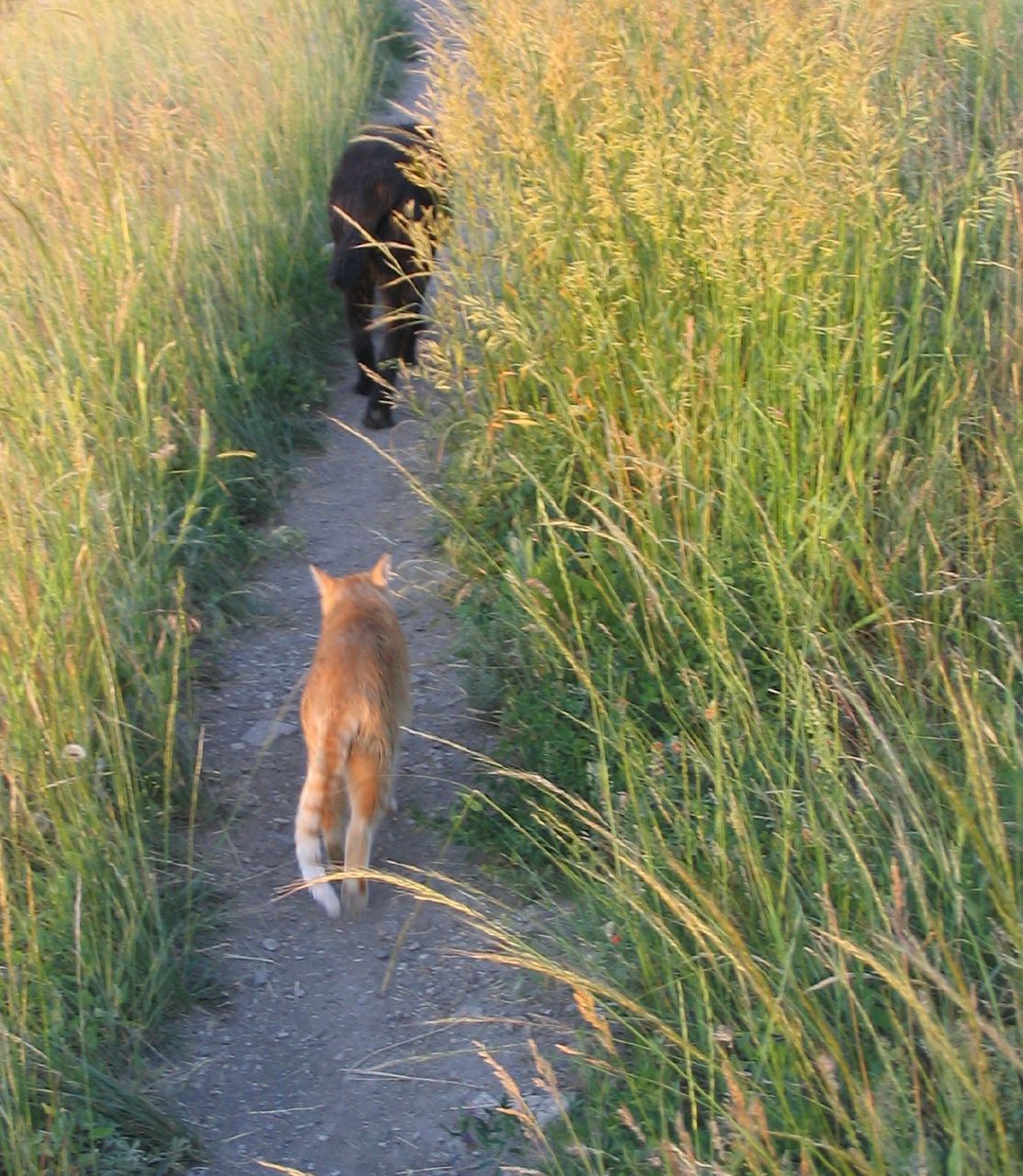
It's more fun and interesting to get my workout by taking a walk or riding my bike -- plus I take my camera along and have a photo shoot along the way. Now that our dog, Sam is 19 years old, our walks are anything but aerobic workouts. So I have to fit in a walk or bike ride by myself every couple of days to get any significant exercise. Still, I enjoy walking with Sam -- it gets me out of the house no matter what, every day. Baggins (cat) goes on walks with us most of the time.

According to Ideal Bite, working out on a gym treadmill uses alot of energy.

10 treadmills in the average gym use 13,500 kilowatt hours of electricity per month. To put that in perspective: that energy would power your water heater for 19 days or let you run your hair dryer nonstop for more than a year.

So, if you want an easy way to save electricity -- stop working out in the gym or cut your gym time in half and get outside!

Saturday, March 22

Do you know the last killing frost date for your town?

Just a wee note to my fellow Montana and Helena gardeners (and would-be gardeners) ... check the climate summary charts at MSU Extension service Garden Guide for the last killing frost dates for your area (scroll down to Lewis & Clark County for Helena) As usual, don't take these for gospel ... every year is different. Still, it's good to note when to plant according to data from years past.


Exploration Garden at the Helena YMCA, seedlings planted by kids.
Photo © Maureen Shaughnessy


Tim and I usually plant our vegetable garden on Memorial Day weekend or the next weekend. Hardy shrubs and perennials can be planted earlier. I like to cover our garden beds with a layer of black plastic to warm up the soil earlier than it would if left uncovered. We've discovered we get huge veggies that way. Well, we also amend our garden soil every year with lots of leaves, compost and aged manure -- I guess that has something to do with our gardening success. (grin)

Links:
MSU Garden Guide articles for March
MSU Extension list of yard and garden publications

Thursday, March 20

Sowing a Native Grass Lawn


Native Grasses seeded on slope at my clients' home near Helena

After a long hiatus from blogging about landscape design and sustainable landscaping, I want to try to get back into blogging about Waterwise Gardening and the like -- after all, this is how I make my living (not by blogging, but by creating landscape designs...)

I subscribe to a weekly email newsletter from SantaFe Greenhouses in New Mexico. Last year, they published an excellent article on sowing a native grass meadow and now that it's spring again, I am reminded that a native grass lawn or meadow is probably one of the best ways to deal with the "deer browse" problem many of my clients ask me about.


Gleaming meadow, originally uploaded by Linda6769.
Linda has so many gorgeous photos of wildflower meadows, grasses and ferns on her Flickr site. Check out her other meadowish pics. And thank you, Linda for letting me blog your photo here.


October Meadow, originally uploaded by jimfrazier.
Thank you Jim for allowing me to use your photo for this blog post.


Southwest Gardens and their partner company High Country Gardens, have several seed mixes formulated for them, one of which would be ideal to sow native grass meadows in the part of Montana where I live, in growing zone 4 with cold winters and dry summers.

Native Grass Species in Mix
  • Blue grama, Hachita (Bouteloua gracilis) 15%
  • Little bluestem, Blaze (Schizachyrium scoparium) 10%
  • Indian ricegrass, Rimrock (Achnatherum hymenoides) 10%
  • Sideoats grama, El Reno (Bouteloua curtipendula) 15%
  • Galleta, Viva (Pleuraphis jamesii) 5%
  • Alkali sacaton, VNS (Sporobolus airoides) 5%
  • Western wheatgrass, Arriba (Pascopyrum smithii) 5%
  • Sand dropseed, VNS (Sporobolus cryptandrus) 5%
  • Buffalo grass, Texoca (Buchloe dactyloides) 10%
  • Sheep fescue, Covar (Festuca ovina) 10%
  • Green needlegrass, Lodorm (Nassella viridula) 5%
  • Perennial ryegrass, Linn (Lolium perenne) Nurse crop 5%

Although some of the grasses in the list above are not native to my area, after calling and inquiring about the mix, I learned that even if they don't all germinate, a meadow sown from this mix will settle out to a "natural" balance of grasses, a subset of the above mix, with the hardy ones thriving and the non-hardies simply failing to return.


Goldenrod and Fencepost, originally uploaded by jimfrazier.

Here are some articles from High Country Gardens specifically about Native Grass Lawns (that one has a bit about interspersing a few perennials in with the grasses for a colorful lawn.) Other articles are available on planting a Blue Gamma grass lawn from seed (Blue gramma grass is a low-maintenance, low-water lawn alternative) and waterwise lawns.


One of my clients' native grass lawn. NativeDesign.

I have to caution you before you dive into a native grass meadow or lawn project, that of the remarks my past customers have made is that native grass lawns tend to look "weedy" or unkempt after awhile. This may happen if you don't get out and mow more often than the 2 times per season I recommend. Also, when the grasses are very tall, their height obscures any lower growing plants in the meadow, or in surrounding plant beds (plants like Oakleaf Sumac, Potentilla, dwarf pines and perennial wildflowers.) A solution to that problem is to plant only short-grass native grasses, so that you can "let the meadow go" but it will not get out of hand, height-wise. Read about a low-maintenance, waterwise native grass lawn at High Country Gardens where they sell a Dwarf Fescue seed for native lawns. The dwarf fescue stays short (under 12 inches) naturally, therefore it's a lower maintenance natural-lawn alternative.

Even if you don't live in New Mexico, the Santa Fe Greenhouses e-newsletter is extremely informative and inspiring. To subscribe to their excellent newsletter by email, click here. They also have their past newsletters archived, so check it out.

Sunday, July 29

Plant a Tree


Old Apple Tree, Copyright by Maureen Shaughnessy

Do you want to plant a tree (or 2 or 3) yet
a.) keep putting it off until you settle down in one house for a long time?
buy a house?
b.) figure out exactly what you're going to do with your garden so you know exactly where to plant the tree?
c.) have enough money saved to afford a large tree?
d.) decide what kind of tree you want to plant?
e.) other?
Well ....
The best time to plant a tree is twenty years ago. The second best time is now. -- International Society of Arborists

Raintree Restaurant Patio
Weeping Tree over Bench, Copyright by Maureen Shaughnessy

HOW TO PLANT A TREE
So .... What are you Waiting For?
Click here for a fact sheet on planting a new tree.


a few facts about trees, listed on the International Society of Arborists website:
  • In one year, an acre of trees can absorb as much carbon as is produced by a car driven up to 8700 miles.
  • Trees provide shade and shelter, reducing yearly heating and cooling costs by 2.1 billion dollars.
  • Trees lower air temperature by evaporating water in their leaves.
  • The average tree in metropolitan area survives only about 8 years!
  • A tree does not reach its most productive stage of carbon storage for about 10 years.
  • Tree roots stabilize the soil and prevent erosion.
  • Trees improve water quality by slowing and filtering rain water as well as protecting aquifers and watersheds.
  • Trees provide food and shelter for wildlife.
  • The death of one 70-year old tree would return over three tons of carbon to the atmosphere


If you love trees, and want to tell other people about it, please head over to the Festival of Trees coordinating blog to find out how to participate in the next festival. Click here:Festival of the Trees

I will be hosting Festival #15 for the month of September, at Raven's Nest (aka Water Earth Wind and Fire) ... so check back here around the 1st of September to see more about trees from all over the world.

Monday, April 23

Tools for Spring Cleanup

Welp, to carry on with my series of Spring Garden Cleanup articles, here's a list of basic spring garden tasks and some tools and other stuff you might need to get the tasks done.

  • General cleanup
  • Dead-heading
  • Dead-"leafing"
  • Cutting back
  • Dividing
  • Staking & training
  • Sweeping, raking
  • Weeding
  • Mulching
  • Watering evergreens
My all-time favorite mail order source for garden tools (outside of local nurseries and garden supply centers) is Lee Valley Tools.

Smith & Hawken, though expensive, has high quality spiffy garden tools (and lots of other cool gardening stuff) if your budget can handle it.

Another great source of excellent garden tools is Hida Tool, a Japanese tool distributor in Berkeley. A local Helena nursery, GardenWorks, carries at least one Hida tool -- the Nejiri Scraper. I love the Nejiri Scraper -- it's the most versatile garden tool I have and a true partner in my war on weeds. (See A below)

Tools you'll need:
Weed Scraper (Nejiri) A
Lopers B for "pick pruning" shrubs and tree branches
Weed Hoe
Dandelion Puller
Felco Hand Bypass Pruners D
Straight Spade or Border Spade
Garden Rake
Leaf or Lawn Rake
Garden Fork
Compost Fork or Pitch Fork
Gloves
Kneepads or foam kneeling pad
Shears (for grasses and groundcovers)
Garden Cart or portable trimmings container


Stuff for sharpening & cleaning your tools (or take them to a sharpening service a week before you plan to do your garden cleanup)

Stuff for cleaning your pots (pot brush - C - above)

Digital camera to record the condition and location of your plants and garden corners


Your Garden Journal (a separate blog post about record-keeping and garden notebooks)

Sunday, April 22

Earth Day 2007: Festival of Strategic Consumption? A Feel-Good Celebration? Or a call to Personal Transformation?

I recently posted about a blog I like -- World Changing -- and their newly published book by the same name. On Friday, World Changing authors Alex Steffen and Sarah Rich wrote an article unlike many other articles focused on Earth Day -- they used strong words to contrast their worries about Earth Day becoming a meaningless exercise in congratulating ourselves on all the progress we've made to protect the earth ... with the usual love-dovey-everything's-rosey language of most other Earth Day missives. They do make a well reasoned point, though in some ways it's just way too depressing for me today.


My perspective on Earth Day is one of cautious optimism. I think there is still a place for celebration along with encouragement to maker bigger, stronger, more difficult changes in our lives.

Alex and Sarah's article makes a well reasoned point that Earth Day 2007 should be the last Earth Day. But I can't help wish and hope they are wrong. Not wrong about what is going on now with the mega-corporations making mega-profits from 'green' products and technology ... but wrong about what the future holds for society and for individuals. I want Earth Day to continue.
I want there to be a day every year in April, when people all over this planet join their consciousness with every part of Creation to strive to heal and be part of the healing, to strive to connect with animals, plants, wind, water, bacteria, molds and fungi ... mountains, deserts and oceans.
I want this day we call Earth Day to spill over into Every Day.

I want Earth Day Every Day to be something we have in our consciousness every morning upon waking, and every hour we spend pushing our grocery carts down aisles loaded with overpackaged products ... and every time we allow mass media to wash over us with its messages of consumption and complacency and every minute we breathe the air our planet so graciously provides us. . . and every evening we are lucky enough to sleep on a comfortable bed in a comfortable warm, dry shelter.
Earth Day 2007I get frustrated and sometimes feel hopeless about ever being able to make strong enough personal changes (aka sacrifices) to really make a difference. I know Tim and I have to reduce our ecological footprint even more than we already do. To get it down to the minimum we can live healthy, fulfilled lives with. Recycling everything we can is not enough. Buying in bulk, riding our bikes, using only energy-efficient lightbulbs and keeping the thermostat no higher than 65F is not going to be enough.

Willow Blossoms Montana Spring

As Alex and Sarah point out, one-planet lives, conceived properly, can be much better lives.
Earth Day Every DayMany products that are more sustainable are also better made and beautifully durable. Green homes -- with natural light and fresh air and good insulation -- are more comfortable than gigantic McMansions. Vibrant neighborhoods with nice streets and parks and a strong community offer a better quality of every day life. Fewer toxic chemicals in the air means less asthma and cancer; better food and more walking means less heart disease and diabetes; less driving means fewer people killed and injured in accidents. Waste is expensive, bad design is expensive, and the money we save eliminating both can leave us better off than we were. We can build lives which are bright green and prosperous.
Gaylord Nelson, visionary and founder of the first Earth Day wrote,
If we human beings learn to see the intricacies that bind one part of a natural system to another and then to us, we will no longer argue about the importance of wilderness protection, or over the question of saving endangered species, or how human communities must base their economic futures – not on short-term exploitation – but on long-term, sustainable development.
Summer Rain

And long before anyone had the idea of celebrating protecting our planet and greening our lives, Chief Sealth (Chief Seattle) told all of us:
All things are connected. Whatever befalls the earth befalls the children of the earth. Man did not weave the web of life; he is merely a strand in it. Whatever he does to the web, he does to himself.


My prayer today is that we each take the message of Chief Sealth and the founders of Earth Day into our hearts -- not only today, April 22, 2007 -- but everyday:
May we resolve to walk softly on our paths. May we start the journey right now and keep to our individual intentions and goals to change how we live, to make a softer, more tender mark on our beautiful and fragile home planet. May we try to do what must be done not because it feels good, but because it is the right thing to do. May we start right now to respect and love and connect with (on a deep soul level) every single part of our environment, whether we live in cities and decide to go outside to appreciate the tenacity of a dandelion sprouting in a crack of concrete ... or whether we live in rural areas and spend our day building compost bins for our gardens .... or live in small towns and spend today or tomorrow or the next day working to build a community food garden or bike path or a Habitat for Humanity energy-efficient home ....

May we always feel the presence of our Mother the Earth, beneath our feet, may we feel her heartbeat in concert with ours, may we know the love of the earth deep in our hearts and bodies and minds. Not just today, Earth Day. May we know these things with our whole selves every day of our lives.


Happy Earth Day Everyday, Everyone!