Showing posts with label reading. Show all posts

Saturday, April 14

Wandering: a Meditation on Life, Art, Trees, Creativity

Whoever has learned how to listen to trees no longer wants to be a tree. He wants to be nothing except what he is. That is home. That is happiness. -- from Wandering
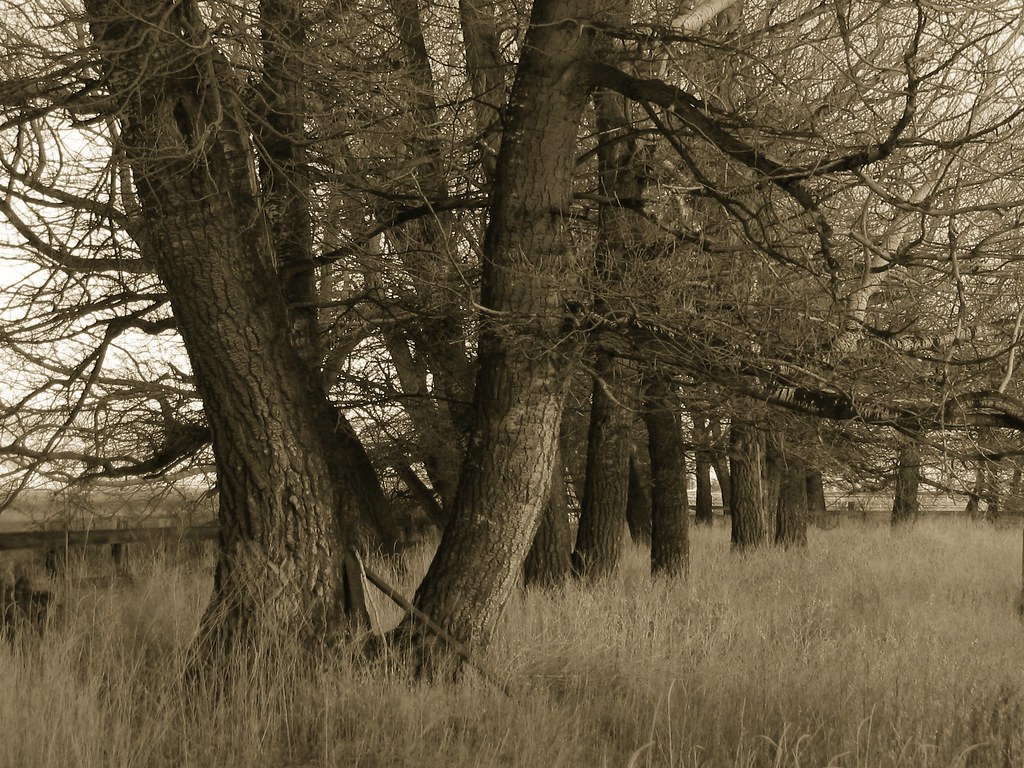
Pasture Protectors

Wandering, Hermann Hesse's collection of succinct prose, poetry and sketches, was on my bookshelf as a young college student. I don't know where it is now -- it's the kind of book you want to keep around to read over and over again, yet at the same time, a book that begs to be passed around from friend to friend ... Hesse's writing is simple, profound, mystical (in a Earth-mystic sense) poetic, inspiring. This is one of my favorite books ever.

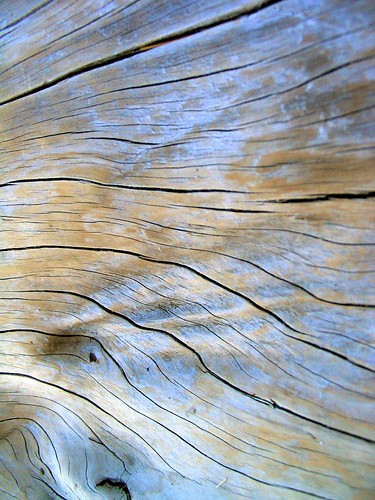
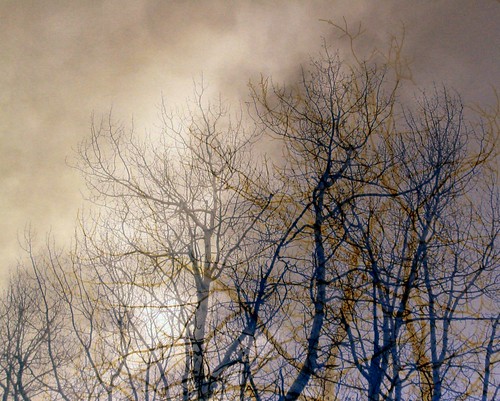
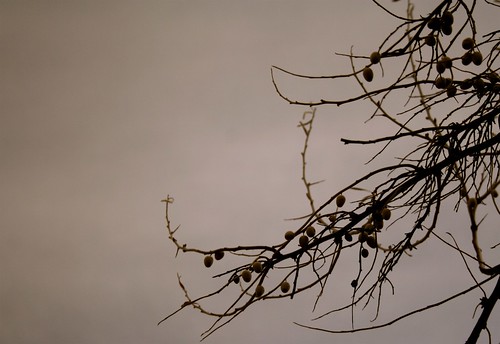
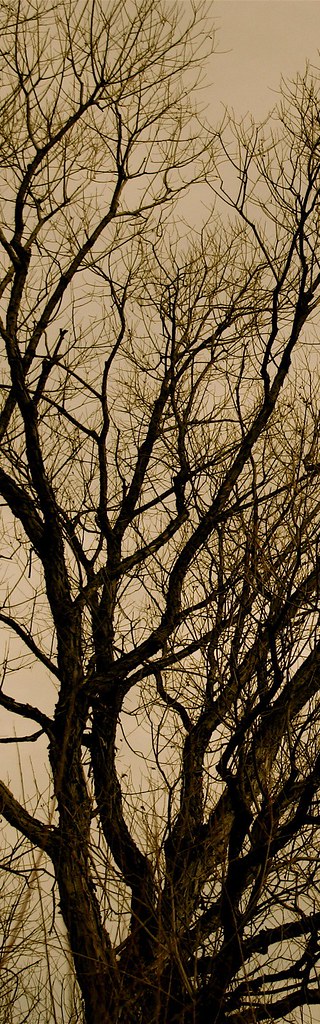
I originally put together this post for Tim's woodworking site, ShopTalk. Inspired by the Festival of Trees, I decided to illustrate my favorite passage from Hesse (on listening to trees) with some of my photos and share it with my readers on Raven's Nest.

Sit down anywhere you like, on a wall, a stone, a tree stump, on the grass or the earth: everywhere they surround you, a painting and a poem, everywhere the world resonates beautifully and happily around you. -- from Wandering
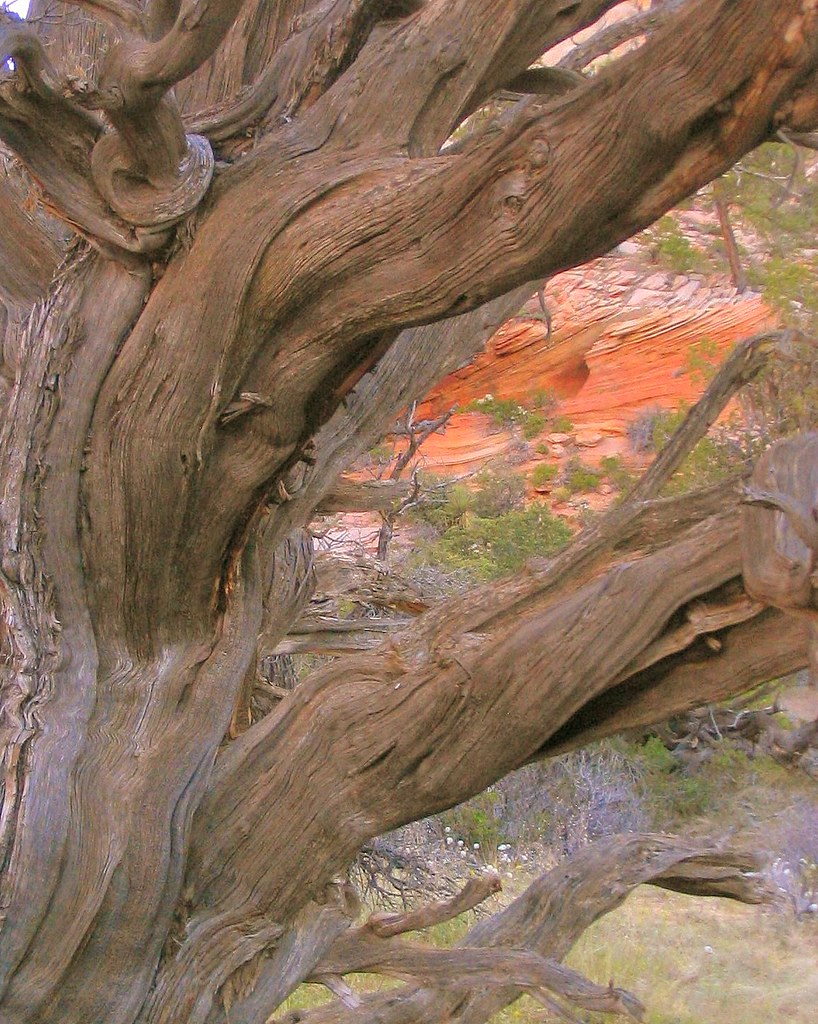
Juniper Snag
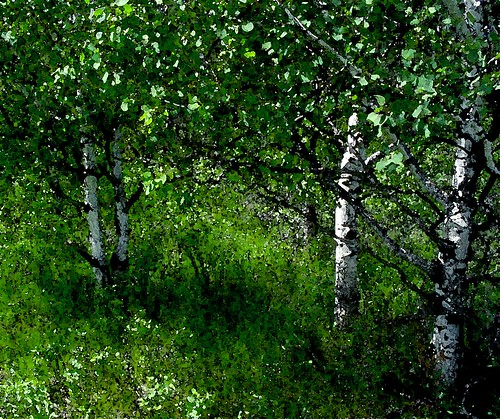
... For me, trees have always been the most penetrating preachers. I revere them when they live in tribes and families, in forests and groves. And even more I revere them when they stand alone. They are like lonely persons. Not like hermits who have stolen away out of some weakness, but like great, solitary men, like Beethoven and Nietzsche.

Lone Cottonwood Braves Coming Storm

... Nothing is holier, nothing is more exemplary than a beautiful, strong tree. When a tree is cut down and reveals its naked death-wound to the sun, one can read its whole history in the luminous, inscribed disk of its trunk: in the rings of its years, its scars, all the struggle, all the suffering, all the sickness, all the happiness and prosperity stand truly written, the narrow years and the luxurious years, the attacks withstood, the storms endured. And every young farmboy knows that the hardest and noblest wood has the narrowest rings, that high on the mountains and in continuing danger the most indestructible, the strongest trees grow.
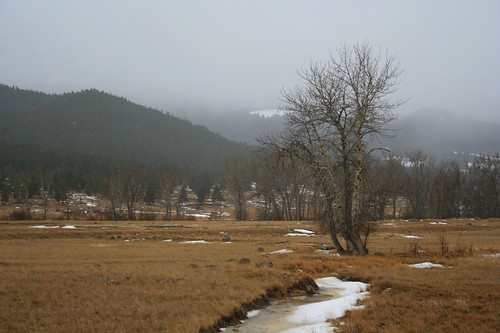
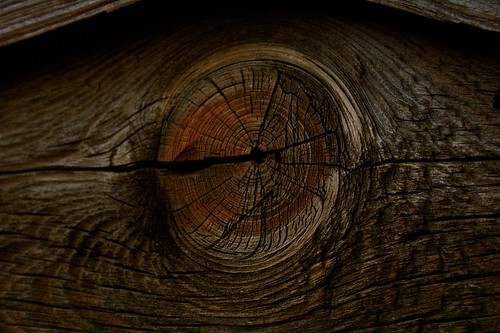
Window Frame

Trees are sanctuaries. Whoever knows how to speak to them, whoever knows how to listen to them, can learn the truth. They do not preach learning and precepts, they preach, undeterred by particulars, the ancient law of life.

Early Budding Fool

A tree says: A kernel is hidden in me, a spark, a thought, I am life from eternal life. The attempt and the risk that the eternal mother took with me is unique, unique the form and veins of my skin, unique the smallest play of leaves in my branches and the smallest scar on my bark. I was made to form and reveal the eternal in my smallest special detail.

Silky Skin

A tree says: My strength is trust. I know nothing about my fathers, I know nothing about the thousand children that every year spring out of me. I live out the secret of my seed to the very end ... I trust that God is in me. I trust that my labor is holy. Out of this trust I live.

Dusk

When we are stricken and cannot bear our lives any longer, then a tree has something to say to us: Be still! Be still! Look at me! ... Let God speak within you, and your thoughts will grow silent. You are anxious because your path leads away from mother and home. But every step and every day lead you back again to the Mother. Home is neither here nor there. Home is within you, or home is nowhere at all.

Eleagnus Solitary against the Evening Vast

A longing to wander tears my heart when I hear trees rustling in the wind at evening. If one listens to them silently for a long time, this longing reveals its kernel, its meaning. It is not so much a matter of escaping from one's suffering, though it may seem to be so. It is a longing for home, for a memory of the Mother, for new metaphors for life. It leads home. Every path leads homeward, every step is birth, every step is death, every grave is Mother.


So the tree rustles in the evening, when we stand uneasy before our own thoughts. Trees have long thoughts, long-breathing and restful, just as they have longer lives that ours. They are wiser than we are, as long as we do not listen to them ...

Whoever has learned how to listen to trees no longer wants to be a tree. He wants to be nothing except what he is. That is home. That is happiness.

-- excerpt from Hermann Hesse: Wandering translated by James Wright, © 1974
Monday, March 26

World Changing: a User's Guide to the 21st Century


World Changing is the next book for us and I'm going to buy it from our local independent bookstore rather than Amazon or Barnes & Noble.

World Changing: A User's Guide to to 21st Century,
is being hailed as the "Whole Earth Catalog for this millennium" (how many of my readers still have Stewart Brand's Whole Earth Catalog on your bookshelves? Do you remember when it first came out in the late 60s? -- I think it was '68 -- now that was a world changing publication (I mean the first Whole Earth Catalog along with it's succeeding versions ...)

Al Gore wrote the forward. Here's a quote:

To build that future, we need a generation of everyday heroes, people who – whatever their walks of life – have the courage to think in fresh ways and to act to meet this planetary crisis head-on. This book belongs in the library of every person who aspires to be part of that generation. -- Al Gore


Check out the World Changing website - it's full of good stuff, very do-able ideas. If you want to do your part to "save the planet" and just need a bunch of good ideas to get you started, this site has it all -- and a weekly newsletter you can sign up for.

Tuesday, December 19

The Road


PatryFrancis wrote an interesting post about Cormac McCarthy's newest book, The Road. I stumbled on her blog post when I was looking around at all the many blogs that have used my photos from flickr (it's really cool that I can find websites that post my photos -- keep an eye on how the images are being used by others ...) Anyway, I was drawn in to her post because I have recently finished reading The Road. I ended up writing a monster of a comment about the book on Patry's blog. And I thought -- I should post it here, too. So here's the comment I wrote:

I just finished reading The Road. We had given it to my 25-year old son, Mickey, as a birthday gift -- something he requested, as he is an avid fan of C McCarthy's. Mickey finished the book quickly (as always) and brought it for me to read when he came home at Thanksgiving. He told me it was very very very sad (exactly his words) but that he thought it was worth reading. He also told me he didn't think I would like it, as in "Wow, this is such a good book!" but that I would probably think the book was a good book anyway. (if that makes any sense ...)

The Road was the saddest book I have ever, ever read. I read all the time. I actually don't mind sad. But this was extreme! Somebody else commented on Patry's post about how sad the book, No Country for Old Men was... well, The Road is definitely more sad than that one.

Others wrote about it being "scary" ... for me it wasn't scary. I just felt incredibly sad for the Earth, for humankind, for all the plants and birds and insects, fish, creatures ... though I know it was fiction, it is so close to what is plausible ...

McCarthy's way of writing dialog -- sparse, stark, succinct ... and his way of not naming his characters ... so that the 2 protagonists were "the boy" and "the man," makes it even sadder. So much more real. The way the primitive mind might think. (by that I mean, the deep human mind that lurks under our conscious mind) So much closer to what might really happen if we somehow destroyed the world, life, everything save for a few not-so-lucky souls.

I had a hard time sleeping each night when I would put the book down on my nightstand. My husband didn't want me telling him anything about the story. I tried to a few times, just to have someone to console me. He just fell asleep. Sometimes reading the story as it plods along unapologetically, trudging with the boy and the man along a half-hidden asphalt road through absolute 100% devastation ... sometimes I would be reading through tears. Tears running down my cheeks. And then, sobs. Sobs -- out loud. I mean it when I say, for me, The Road was the saddest book ever! It wasn't the kind of "sad" I've felt reading a book like "The Color Purple" or Wendell Berry's "Jayber Crow" where the story takes saddish turns now and then. The Road was thoroughly, deeply sad. When I finished The Road, I gave it to him. He put it on the bottom of his pile of books under the nightstand on his side of the bed. I know he won't read it.

And yet, the man and the boy, each the other's world entire, have such love -- that love sustains them along their forced journey through a bleak and ashy world. McCarthy conjures a vision of the worst that could happen to our world - through human fault -- and the best part of the human soul. There is 100% destruction of everything around them. Except for the tenderness between this father and this son.

That tenderness was, for me, the tiny flicker of hope in all the sadness, grief -- and anger -- I felt reading the book. The faith held between the man and the boy, that they were carrying the fire ... somehow carrying a seed of humanity's true essence -- in the face of the world's total destruction, that seed is hope.

Fire is an important part of the spiritual path I share with my husband. Maybe that's why the hope really sank in -- touched me deeply. Somehow this dark, dark tale made me glad to be alive, lucky for all the blessings and gifts we have -- now.

And for that reason, I would read the book again. And recommend it to anyone who knows they like Cormac McCarthy.
Here is a comprehensive NYT book review of The Road, with excerpts.

Tuesday, October 24

all we need to make us happy ...


all we need to make us happy
Copyright 2006 by Maureen Shaughnessy
originally uploaded by MontanaRaven.

We act as though comfort and luxury
were the chief requirements of life,
when all that we need to make us happy is
something to be enthusiastic about.

-- Albert Einstein

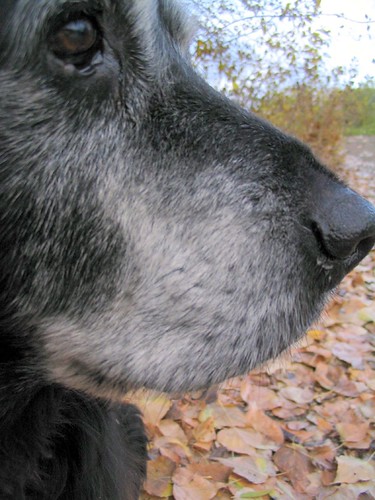
Sam, at age 17, still has enthusiasm about going for walks every day, or sitting next to me, taking in the beauty through his seasoned eyes.

Wednesday, June 7

Once blue is acquired it eclipses green


Once blue is acquired it eclipses green Originally uploaded by MontanaRaven.

"Under normal vision the most probably colors of things do not necessarily match up with their names. Physically, eyes see the colors of the spectrum the same, but when we utter a term for a color, it is not the color's immutable property; it is the name of a perception. In the hands of language and culture, simple chromatic sensations acquire a kaleidoscope of reference and meaning. As writer Alexander Theroux suggest, color is fictive space.

When a name for a color is absent from a language, it is usually blue. When a name for a color is indefinite, it is usually green. Ancient Hebrew, Welsh, Vietnamese, and, until recently, the Assyrians turned uknu, the noun for lapis lazuli, into an adjective. The Icelandic word for blue and black is the same, one word that fits sea, lava, and raven ... Goethe's blue is the color of enchanting nothingness.

It has been shown that the words for colors enter evolving languages in this order, nearly universally: black, white, and red, then yellow and green (in either order) with green covering blue until blue comes into itself. Once blue is acquired, it eclipses green. Once named, blue pushes green into a less definite version. Green confusion is manifest in turquoise, the is-it-blue-or-is-it-green color .... "
-- by Ellen Meloy from The Anthropology of Turquoise: Reflections on Desert, Sea, Stone, and Sky Copyright Ellen Meloy, 2002.


Along with Turquoise, the following three books, also by Ellen Meloy, are on my bedroom bookshelf (meaning I read them often -- not just once) and I highly recommend any of these:
Raven's Exile
Eating Stone: Imagination and the Loss of the Wild
The Last Cheater's Waltz: Beauty and Violence in the Desert Southwest

Layers

More from The Anthropology of Turquoise:
"Within every color lies a story, and stories are the binding agent of culture. The color name ochre comes from a word that Homer used with chloros (a greenish tinge) to express the pallor of men's faces in the fear of battle. Amethyst comes from the Greek amethystos, "not drunk," topaz from topazein, "to conjecture," because the Greeks believed the gem's source was an island hidden by clouds and fog. I dip my brush into a pan of lacustrine blue. Five centuries ago lapis lazuli came from the Sinai or across the sky-raking Hindu Kush to Europe, there to be ground into powder for painters of the Madonna's robes. The Maya mixed clay and indigo in a complex chemistry to find a blue that a person could take to the afterlife."
-- Ellen Meloy, Copyright 2002 by Ellen Meloy

Thursday, June 1

Poetry Thursday: Solace


Solace Originally uploaded by MontanaRaven.

Solace

June first, not yet summer
in Montana, more than spring
today I do not have Sam with me
when I come to our meadow
today I am practicing
not having him.

Can I slide into the future,
without making a ripple
or sucking in my breath,
the way some people ease themselves
into icy water
one toe at a time?

It's not any easier this way.

In this copse of twisted trees
most are garbed in green while
others wear the pall of winter:
bone-wrapped branches,
bleached blades.
Looking forward, glancing back
Inhale ... exhale ...

My solace is silken bunchgrass
on a cheek, or dancing
aspen leaves ...
like whispered prayers moving
on a breath of air
they remind me to breathe.


--- Maureen Shaughnessy

I wrote this blog post for Poetry Thursday. Check out other poetry posts for this week by clicking this button:


This is also something I did for the Utata Thursday Walk project:

I left a rather loooonnng comment on Liz's Poetry Thursday post. Thought I'd share what I wrote here, since some people don't read the comments and might be interested:
I'm smiling and chuckling as I read your post, Liz ... along with all the the comments about reading in the bathtub. We live in a tiny (900 sf) house (well, tiny by North American standards...) with one bathroom, no shower -- just a big old tub. Before all of our kids left home, it was the only place in the house to get any real privacy, so it became not only the evening reading-place for every one of us ... but also for our boys, their story-spinning place and imaginary-world-action-figure-play-place. I never really worried about ruining books by reading them in the tub. Every well-loved book on our library shelves truly looks well-read, some of them have that tell-tale puffy look books get when they have absorbed a certain amount of steam.

oh well.

So I still read in the tub. Anyway, I loved your whole post, Liz. Of course, you know Stafford is one of my favorite poets -- in my top 3. And Kathleen Norris - she's up there too.

I love this line, from Mark Mitchell's dedication on The Sleep of Grass, where he is writing about the many poems written and dedicated to William Stafford, to his memory and legacy: What you have now is a piece of lost mail pursuing an elusive address. One that is nowhere and, as Dorothy Stafford says, "is everywhere now."

The idea of reading poetry aloud ... is coming back into it's own, is being revived from the days of the staid, serious poetry reading ... in the performances of more recent poetry slams. Slams have their drawbacks and aren't for everybody, but one thing I'll say about poetry slams: they encourage poets -- both seasoned and new poets -- to write with the spoken word in mind. For me, saying my poems and thoughts as I write is the best way to establish the right rhythmn, line breaks, word-juiciness and alliteration. Saying a poem while I'm writing it makes it more like a song, connects me with its' emotion and heart.

Monday, February 13

Ask me. What the river says, that is what I say

Thinking about the poet William Stafford lately, partly because I was reminded to find and re-read the books of his poetry on our bookshleves. Reminded by Liz when she quoted one of his poems on her blog, Be Present Be Here.
I remember when he died in 1993. I was saddened by the world's loss - of an inspiring teacher and poet. I wish I had known him personally. I met him (once) when he guest taught a creative writing class. I have a few of his books and would love to own more. William Stafford is among my favorite 3 or 4 poets -- the ones I turn to when I am feeling lost, when I need a hand, when I want to feel connected and be reminded that I am always connected because I am part of the world.

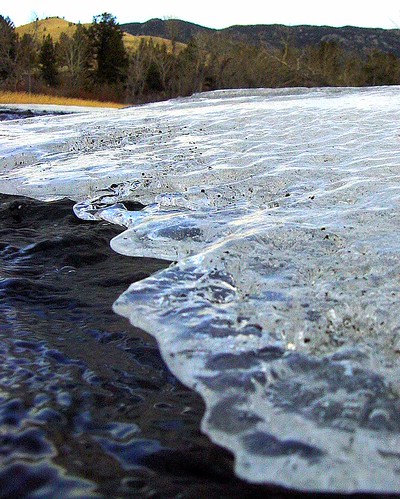
Will write more about Stafford and share more of his poetry on my blog as I have time. I the meantime, here is a Stafford poem to accompany my photo of the frozen Boulder River.

Ask Me
by William Stafford

Some time when the river is ice ask me
mistakes I have made. Ask me whether
what I have done is my life. Others
have come in their slow way into
my thought, and some have tried to help
or to hurt: ask me what difference
their strongest love or hate has made.

I will listen to what you say.
You and I can turn and look
at the silent river and wait. We know
the current is there, hidden; and there
are comings and goings from miles away
that hold the stillness exactly before us.
What the river says, that is what I say.


Peace.

Wednesday, November 30

Reading With Children

My mom and I were chatting this morning and after a while she said she had to leave to go listen to some kids read at the elementary school. I think it's cool she does that - she's the perfect "grandmotherly" type to sit and listen, and encourage children to read for pleasure and that wonderful sense of accomplishment that comes with reading.

In thinking about my own kids' reading habits (they're grown and gone now) I sometimes believe I never really had to encourage them to read. It just seemd like they naturally read all the time. But in reality, I did encourage them -- Mickey and Gabe read because I read. And because I read with them ... and because we had books around all the time, because our favorite (and cheap) places to go for entertainment were A) the Library and B) the bookstore where we spent hours sitting on the floors, reading, browsing, picking out piles of books to bring home (didn't bring books home from the bookstore that often.)

We read the Jeeves stories out loud to each other, laughing together as we "tried on" the characters' accents. At breakfast for a year, we took turns reading one chapter at a time from Brian Jacque's Redwall books, whose chapters were short enough to be read during a hastily gulped breakfast before school. Those books also gave us a great excuse for putting on many different accents since every character has a unique voice.

Mainly, I think we read alot and had books around alot because we didn't own a television for most of the time Mickey and Gabe were growing up. They used to get a kick out of telling their teachers they didn't have a tv at home (especially when there was a homework assignment that involved watching tv) and they gained a certain notoriety with their school mates for being the only kids who didn't have a tv.

So we were tv-less and book-rich ... until Tim moved up to Helena and became part of our family. He had a, ummm, he had a television. At first, I wouldn't let him bring the tv inside. It was banished to the garage. And of course, the garage was just for storage, so no one ever "watched" it out there ... then, after, oh maybe a year or two, the tv snuck into the house. The excuse was we occasionally wanted to watch a video. Okay okay. But it had to stay in the closet!

Another year goes by and next thing ya know, the tv is out of the closet .... sitting in the living room -- but only under a blanket or other suitable piece of cloth to disguise it and keep it out-of-sight-out-of-mind. . It's funny how sneakily that thing inserted itself into our lives. At least the kids were gone off to college by the time we started using it as an actual .... ohmigod... an actual television.

Eventually the tv won out and I gave in. Tim convinced me that he only wanted to watch PBS and the Jim Leherer News Hour and Bill MoyersNow on Friday nights ... hmmm, gradually it's become more and more a part of our lives. Tim, my incredible cabinet maker husband (I love you, Tim!) has yet to build an "entertainment center" to hide our tv so there it sits in the living room 24/7. Hmmm... at least it's not right smack dab in the center of the room.


signatures
Originally uploaded by skuz.


We are still book-rich (that's Gabe's photo of one of his hand-bound books in progress.) Mickey and Gabe still read alot, although maybe not as voraciously as they did growing up. And all of us have benefitted from lives immensely enriched by literature, poetry, non-fiction, periodicals, even (gasp!) newspapers. By writing, too: poems, song lyrics, letters, emails, journals, essays, term papers, musings, grocery lists and notes-to-self. Gabe is binding books and journals these days, teaching others to do the same ... and working on his own book this year.

Today, I realized I missed Children's Book Week, which was November 14 through 20th this year. Even though Book Week is officially over, it's never too late to encourage and inspire yourself and others (especially children) to read, read, read. Books are great - the internet is wonderful too, but in my mind, books are better. Here's a link to a series of educational activities and lesson plans on reading.

Saturday, October 1

Banned Books Week

I didn't realize until today that this past week, ending today (October 1st) has been Banned Books Week -- sponsored and promoted by the American Library Association. It is a week to become aware, as much as you can, of the potential threat to one of our basic rights and freedoms -- the freedom of speech -- that can be eroded very quickly by people who want certain books banned from libraries, from schools. Just out of curiosity, I check the American Library Association's list of the top 100 most "challenged" books from 1990 through 2000 -- to see how many I have read, or have had in the house for my sons. I wasn't surprised, knowing my rebellious streak - that I've read 60 of the 100 books. Most of the books I haven't read are children's or teen books that my kids may have read.

The Top 100 Most Challenged Books of 1990 to 2000:

1. Scary Stories (Series) by Alvin Schwartz
2. Daddy’s Roommate by Michael Willhoite
3. I Know Why the Caged Bird Sings by Maya Angelou
4. The Chocolate War by Robert Cormier
5. The Adventures of Huckleberry Finn by Mark Twain
6. Of Mice and Men by John Steinbeck
7. Harry Potter (Series) by J.K. Rowling
8. Forever by Judy Blume
9. Bridge to Terabithia by Katherine Paterson
10. Alice (Series) by Phyllis Reynolds Naylor
11. Heather Has Two Mommies by Leslea Newman
12. My Brother Sam is Dead by James Lincoln Collier and Christopher Collier
13. The Catcher in the Rye by J.D. Salinger
14. The Giver by Lois Lowry
15. It’s Perfectly Normal by Robie Harris
16. Goosebumps (Series) by R.L. Stine
17. A Day No Pigs Would Die by Robert Newton Peck
18. The Color Purple by Alice Walker
19. Sex by Madonna
20. Earth’s Children (Series) by Jean M. Auel
21. The Great Gilly Hopkins by Katherine Paterson
22. A Wrinkle in Time by Madeleine L’Engle
23. Go Ask Alice by Anonymous
24. Fallen Angels by Walter Dean Myers
25. In the Night Kitchen by Maurice Sendak
26. The Stupids (Series) by Harry Allard
27. The Witches by Roald Dahl
28. The New Joy of Gay Sex by Charles Silverstein
29. Anastasia Krupnik (Series) by Lois Lowry
30. The Goats by Brock Cole
31. Kaffir Boy by Mark Mathabane
32. Blubber by Judy Blume
33. Killing Mr. Griffin by Lois Duncan
34. Halloween ABC by Eve Merriam
35. We All Fall Down by Robert Cormier
36. Final Exit by Derek Humphry
37. The Handmaid’s Tale by Margaret Atwood
38. Julie of the Wolves by Jean Craighead George
39. The Bluest Eye by Toni Morrison
40. What’s Happening to my Body? Book for Girls: A Growing-Up Guide for Parents & Daughters by Lynda Madaras
41. To Kill a Mockingbird by Harper Lee
42. Beloved by Toni Morrison
43. The Outsiders by S.E. Hinton
44. The Pigman by Paul Zindel
45. Bumps in the Night by Harry Allard
46. Deenie by Judy Blume
47. Flowers for Algernon by Daniel Keyes
48. Annie on my Mind by Nancy Garden
49. The Boy Who Lost His Face by Louis Sachar
50. Cross Your Fingers, Spit in Your Hat by Alvin Schwartz
51. A Light in the Attic by Shel Silverstein
52. Brave New World by Aldous Huxley
53. Sleeping Beauty Trilogy by A.N. Roquelaure (Anne Rice)
54. Asking About Sex and Growing Up by Joanna Cole
55. Cujo by Stephen King
56. James and the Giant Peach by Roald Dahl
57. The Anarchist Cookbook by William Powell
58. Boys and Sex by Wardell Pomeroy
59. Ordinary People by Judith Guest
60. American Psycho by Bret Easton Ellis
61. What’s Happening to my Body? Book for Boys: A Growing-Up Guide for Parents & Sons by Lynda Madaras
62. Are You There, God? It’s Me, Margaret by Judy Blume
63. Crazy Lady by Jane Conly
64. Athletic Shorts by Chris Crutcher
65. Fade by Robert Cormier
66. Guess What? by Mem Fox
67. The House of Spirits by Isabel Allende
68. The Face on the Milk Carton by Caroline Cooney
69. Slaughterhouse-Five by Kurt Vonnegut
70. Lord of the Flies by William Golding
71. Native Son by Richard Wright
72. Women on Top: How Real Life Has Changed Women’s Fantasies by Nancy Friday
73. Curses, Hexes and Spells by Daniel Cohen
74. Jack by A.M. Homes
75. Bless Me, Ultima by Rudolfo A. Anaya
76. Where Did I Come From? by Peter Mayle
77. Carrie by Stephen King
78. Tiger Eyes by Judy Blume
79. On My Honor by Marion Dane Bauer
80. Arizona Kid by Ron Koertge
81. Family Secrets by Norma Klein
82. Mommy Laid An Egg by Babette Cole
83. The Dead Zone by Stephen King
84. The Adventures of Tom Sawyer by Mark Twain
85. Song of Solomon by Toni Morrison
86. Always Running by Luis Rodriguez
87. Private Parts by Howard Stern
88. Where’s Waldo? by Martin Hanford
89. Summer of My German Soldier by Bette Greene
90. Little Black Sambo by Helen Bannerman
91. Pillars of the Earth by Ken Follett
92. Running Loose by Chris Crutcher
93. Sex Education by Jenny Davis
94. The Drowning of Stephen Jones by Bette Greene
95. Girls and Sex by Wardell Pomeroy
96. How to Eat Fried Worms by Thomas Rockwell
97. View from the Cherry Tree by Willo Davis Roberts
98. The Headless Cupid by Zilpha Keatley Snyder
99. The Terrorist by Caroline Cooney
100. Jump Ship to Freedom by James Lincoln Collier and Christopher Collier


ALA | Banned Books Week

Friday, January 21